
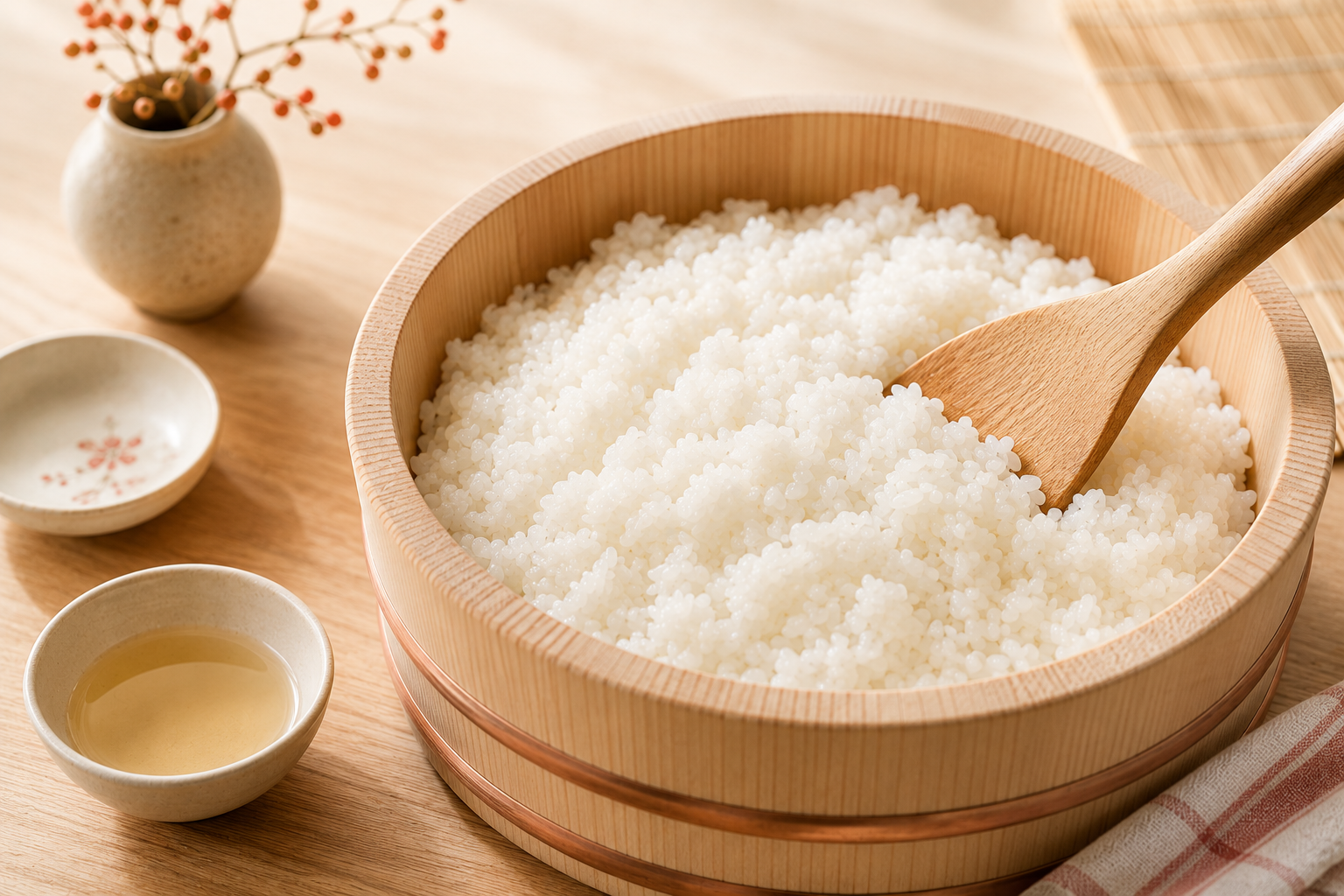
Great sushi starts with the rice. Sushi rice — or sumeshi — is freshly cooked short-grain rice seasoned with a sweet-sharp vinegar dressing, so each grain is glossy, separate and just sticky enough to shape. The easiest, most reliable way to get it right is in a Japanese rice cooker, many of which have a dedicated Sushi setting. This simple recipe gives you perfect sushi rice every time, ready for nigiri, maki rolls, temaki or a chirashi bowl.
Ingredients
- 3 rice-cooker cups (about 540 ml / 450 g) short-grain Japanese sushi rice
- Water — to the “Sushi” level for 3 cups
- 1 piece kombu, about 5 cm (optional, for extra umami)
For the sushi vinegar
- 4 tbsp (60 ml) rice vinegar
- 3 tbsp sugar
- 1 tsp salt
Method
- Measure the rice using your rice cooker’s cup. Rinse it under cold water, swirling and draining, until the water runs almost clear — this removes excess starch so the grains stay distinct. Drain well.
- Tip the rice into the inner pan and add water to the Sushi line for 3 cups (slightly less water than usual gives firmer grains that hold their shape). Lay the kombu on top, if using. Cook on the Sushi setting — or the standard White Rice setting if your cooker doesn’t have one.
- While the rice cooks, make the sushi vinegar: stir the rice vinegar, sugar and salt together in a small non-metal bowl until the sugar fully dissolves. Warming it very gently helps.
- When the rice is done, remove the kombu and tip the hot rice into a large, wide, shallow bowl — ideally a wooden sushi tub (hangiri). Never use a metal bowl, as it reacts with the vinegar.
- Pour the sushi vinegar evenly over the hot rice. Using a rice paddle, cut and fold through the rice with a slicing motion to coat every grain — don’t stir or mash, or it turns gluey.
- As you fold, fan the rice (a hand fan or piece of card works) to cool it quickly. It’s ready when it has cooled to around body temperature and looks glossy, with separate, shiny grains.
- Cover with a clean, damp cloth to stop it drying out, and use the same day at room temperature. Now shape it into your favourite sushi.
Tip: Short-grain Japanese rice is essential — long-grain or basmati won’t bind. Don’t refrigerate finished sushi rice; the cold turns it hard and dry, so make only what you’ll use that day. New to Japanese rice cookers? See our guide to rice cooker technology.


