
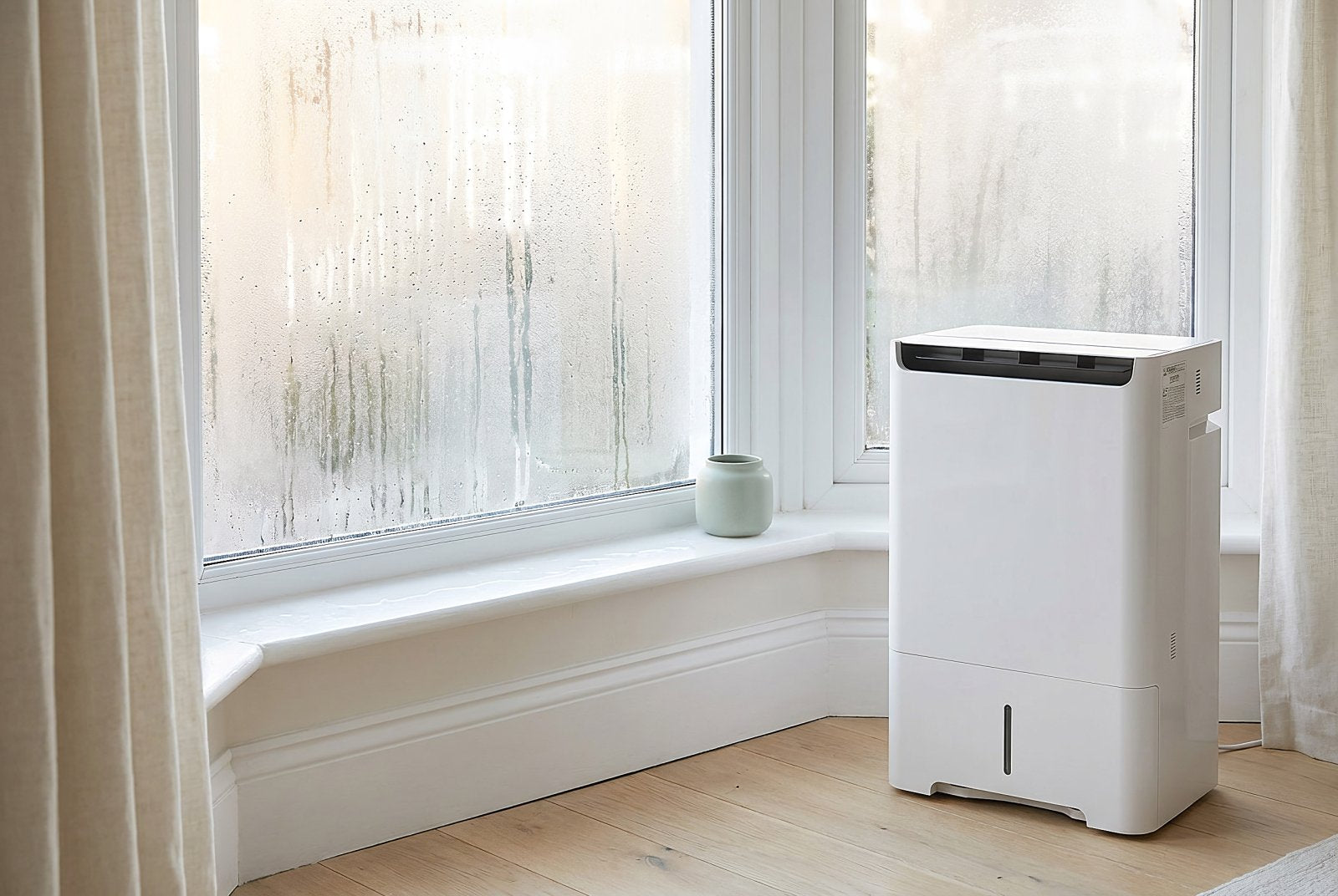
Quick Answer: How to Stop Condensation on Windows
- First, check where it is. Inside the glass is fixable. Outside is harmless. Between the panes means the seal has gone.
- Ventilate: ten minutes of open windows each morning, trickle vents open, extractor fan on when showering or cooking.
- Then control the humidity. A dehumidifier held at 45–55% is the only step that removes moisture rather than hoping the outside air is drier.
- Do not dry washing in a closed bedroom. It is the most common cause of morning condensation in UK homes.
Why condensation forms on windows
Warm air holds moisture; cold air cannot. When the warm, humid air in your home touches a cold pane of glass it cools instantly and has to give that moisture up — so it appears as water on the window.
A typical household adds several litres of water to the air every day through cooking, showering, washing up, drying laundry indoors and simply breathing. In summer it drifts out through open windows. In a British winter the heating is on, the windows are shut, and the coldest surface in the room is the glass. That is why your windows are wet in January and fine in July.
First: which kind of condensation have you got?
This is worth thirty seconds before you spend any money, because two of the three need completely different action.
Six ways to stop it, from free to most effective
Work down this list. The first four cost nothing, and for a mildly damp room they may be enough on their own.
The single cheapest thing you can do. Ten minutes of cross-ventilation dumps the moisture that built up overnight without letting the house go cold.
Most modern UK windows have a slim vent along the top of the frame. A surprising number of people never open them — or tape them shut because of draughts.
A shower puts a litre of water into the air in minutes. Run the fan during and for fifteen minutes after, with the door closed so it does not spread through the house.
Even a 5cm gap lets air circulate behind a wardrobe or sofa and stops the dead, cold spot where condensation and mould settle first.
The only option on this list that actively removes moisture rather than relying on the weather outside being drier than the air inside. Set it to around 50% and it holds the room there.
Warmer glass means less condensation, and it is the permanent fix. But it is a four-figure job, and it will not help this winter.
Bar length shows how much each step typically reduces condensation in a damp UK room.

Trickle vents along the top of the frame are the most-ignored free fix in a British home — many people never open them at all.
Why a dehumidifier is the step that actually works
Ventilation only helps when the air outside is drier than the air inside. On a damp, still British November day it often is not, which is why you can air the house for an hour and still wake up to wet windows. A dehumidifier does not depend on the weather: it takes moisture out of the room and holds the level where you set it.
The target is 45–55% relative humidity — the band where glass and wall surfaces stay above the point at which moisture condenses. We explain what that number means, and the damp problems a dehumidifier cannot solve, in Does a dehumidifier help with mould?
On cost: the models we sell run at 4.6p to 9.4p an hour, and a humidistat means they are not running constantly. Full figures are in how much it costs to run a dehumidifier in the UK.
Three things not to bother with
- Washing-up liquid on the glass. A widely shared tip that changes how the water sits on the pane so it looks clearer. The moisture is still in the room, and it will settle on a wall or behind a wardrobe instead — where you will not notice until it stains.
- Sealing the trickle vents. Taping them over to stop a draught is one of the fastest ways to turn a mild condensation problem into a mould problem.
- Wiping only. Do wipe the sill so the paint and timber survive, but do not mistake it for a fix. If you are wiping every morning, the humidity is the thing to change.
Which dehumidifier for condensation?


Comparing brands and capacities in more detail? See our Best Japanese Dehumidifiers UK guide, or browse the full range of Japanese dehumidifiers.
Dry windows, every morning
Genuine Japanese dehumidifiers — Mitsubishi, Panasonic & Sharp. Authentic 220–240V with a fitted UK plug and UK-based warranty support.
Shop dehumidifiersFrequently asked questions
Q: How do I stop condensation on my windows overnight?
A: Lower the humidity in the room before you go to bed and keep some air moving. Close the bedroom door, leave the trickle vent open, keep the curtains from sealing tight against the glass, and run a dehumidifier set to around 50% for a few hours in the evening. Drying washing in a bedroom overnight is the single most common cause of morning condensation.
Q: Why is condensation worse in winter?
A: Because the glass is colder and the windows stay shut. Warm indoor air holds far more moisture than cold air, so when it touches a cold pane it cools instantly and releases that moisture as water. In summer the same air simply escapes through open windows.
Q: What can I put on my windows to stop condensation?
A: Nothing you apply to the glass fixes the cause. Anti-condensation sprays and the widely shared washing-up liquid trick work by changing how water sits on the surface, so the pane looks clearer, but the same amount of moisture is still in the room and will settle somewhere else — usually a wall or a wardrobe back. Deal with the humidity instead.
Q: Should I wipe the condensation off every morning?
A: Yes, wipe it up — but treat it as tidying, not a solution. Leaving water sitting on a sill will eventually damage paint and timber and feed mould in the frame corners. Wiping stops that damage, but the moisture is back tomorrow unless you tackle the humidity.
Q: Is condensation on the outside of my windows a problem?
A: No, the opposite. External condensation forms on clear, still nights when the outer pane drops below the dew point, and it only happens when the glass is well insulated — meaning your double or triple glazing is doing its job. It clears by itself.
Q: Will a dehumidifier stop condensation completely?
A: In most homes it will stop it being a daily problem. Holding a room between 45% and 55% relative humidity keeps the glass above the point where moisture condenses. On an exceptionally cold night with single glazing you may still see some, but it will be a fraction of what you had.