
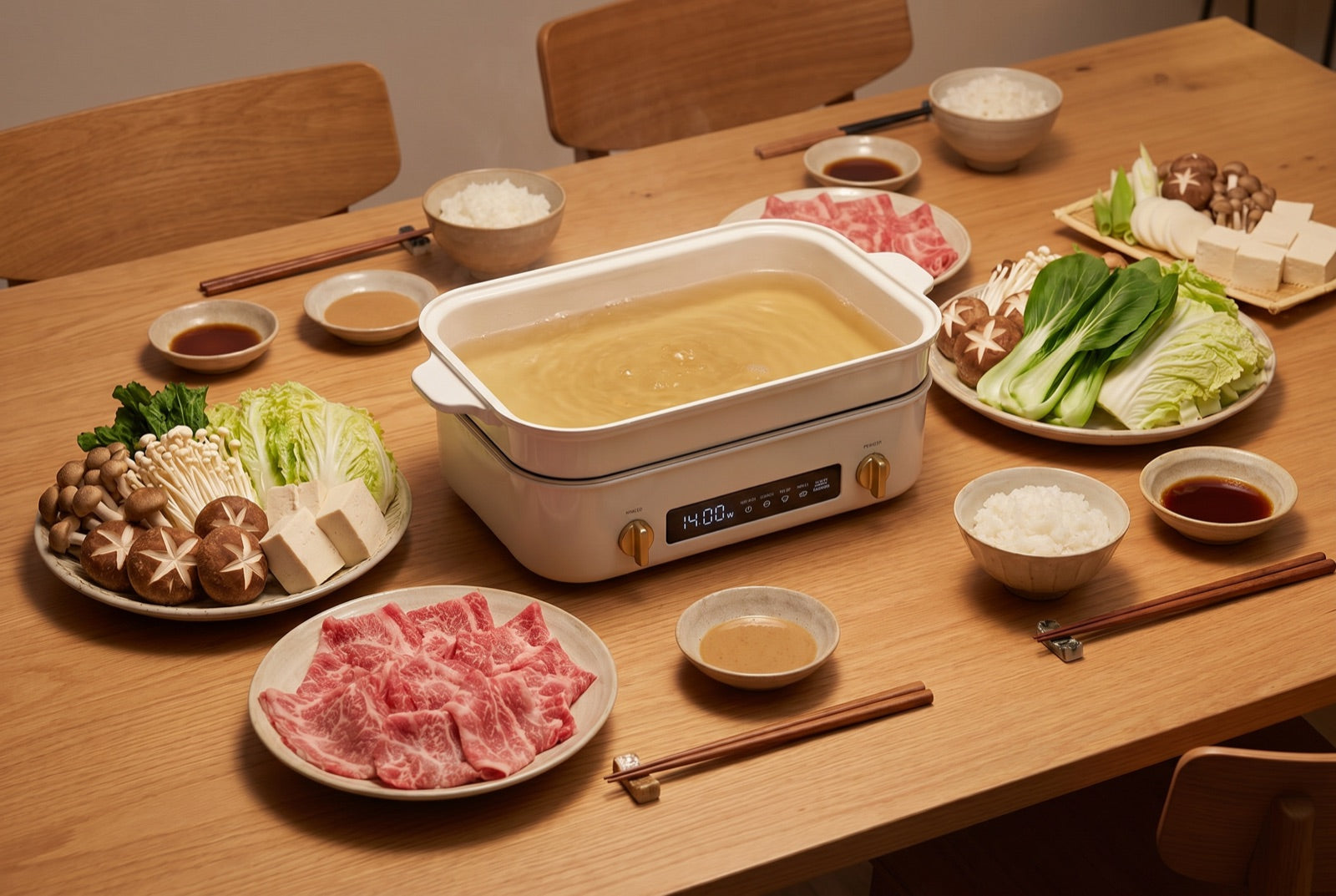
Your Hotpot Night, at a Glance
- The kit: a tabletop BRUNO hot plate + a deep/ceramic pot.
- The broth: start simple with kombu dashi; level up to miso, sukiyaki or shabu-shabu.
- The spread: thinly sliced meat, leafy veg, mushrooms, tofu, noodles + a few dipping sauces.
- The magic: everyone cooks together at the table — you stay part of the party.
There's a reason hotpot is the ultimate way to feed friends and family: everyone gathers around one bubbling pot, cooks as they chat, and eats it piping hot. With a Japanese tabletop hot plate you bring the cooking to the table — no more being stuck at the stove while everyone else has fun. Here's how to host a brilliant Japanese hotpot (nabe) night at home.
Why a tabletop hotpot night beats a normal dinner party
A traditional dinner means one cook, head down in the kitchen, missing the conversation. A hotpot night flips that completely. You set the pot in the middle, everyone adds and fishes out their own ingredients, and the meal unfolds slowly over an hour or two. It's relaxed, interactive and naturally sociable — the cooking is the entertainment.
What you need
The only real equipment is a tabletop hot plate with a deep or ceramic pot. All three BRUNO models work; the Digital's 3L deep pot is the easiest for a hungry group, while the Oval includes a ceramic pot in the box. New to them? See our Compact vs Oval vs Digital guide.


Step 1: Choose your broth
The broth sets the tone. Start simple and build up:
- Kombu dashi — a clean kelp broth; the classic shabu-shabu base where dipping sauces do the talking.
- Miso — rich and warming, great with pork and cabbage.
- Sukiyaki — sweet-savoury soy and mirin, with beef and a raw egg dip.
- Spicy — a chilli-miso or tan-tan base for those who like heat.
Step 2: Prepare the ingredients

Half the fun is the spread. Slice everything thin so it cooks in seconds. A good mix for four:
- Protein: thinly sliced beef or pork, prawns, fish balls, chicken.
- Vegetables: napa cabbage, pak choi, spring onion, carrot.
- Mushrooms: enoki, shiitake, shimeji.
- Plus: firm tofu, and udon or glass noodles to finish.
Step 3: Mix your dipping sauces

Dipping sauces are where everyone makes the meal their own:
- Ponzu — citrusy soy; add grated daikon and spring onion.
- Goma dare — nutty sesame sauce, a shabu-shabu favourite.
- Chilli oil (rayu) — a spoonful for warmth and depth.
Step 4: Cook at the table
Fill the pot two-thirds with broth, bring it to a gentle simmer, then lower to a steady bubble. Add the slow-cooking items first (cabbage stalks, carrot, tofu), then let everyone swish in thin meat and quick veg as they go. Skim any foam, top up the broth as it reduces, and keep the heat moderate so nothing boils dry.
Step 5: Finish with the best bit — shime
When the ingredients are gone, the broth has become liquid gold. Add cooked rice for zōsui (a savoury porridge) or drop in udon for the final course. It's the traditional Japanese way to end a hotpot, and nobody leaves hungry. For a tried-and-tested combination, try our two-broth shabu-shabu hotpot recipe.
One machine, many nights

The same hot plate isn't just for hotpot. Swap the plate and make takoyaki, okonomiyaki, yaki udon or six-well garlic prawn ahijo — one appliance, endless gatherings. (See which plates fit which model in our hot plates & grillers collection.)
Ready to gather everyone around the table?
Find your tabletop hot plate — every model genuine and UK-plug ready.
Shop BRUNO Hot PlatesFrequently Asked Questions
Q: Do I need a special pot for hotpot?
A: A deep pot makes hotpot easy. The BRUNO Oval includes a ceramic pot, and the Digital comes with a 3L deep pot — both ideal. For the Compact, add the ceramic-coated pot.
Q: How many people can one hot plate feed?
A: The Compact and Oval comfortably suit 2–3, while the Digital's larger 3L pot is better for 3 or more. For a big group, a second plate keeps the broth flowing.
Q: Are the hot plates UK voltage?
A: Yes — every hot plate we sell is genuine 220–240V with a fitted UK 3-pin plug, ready to use with no transformer or adapter.
Q: What broth should a beginner start with?
A: A simple kombu (kelp) dashi is the easiest and lets everyone add flavour through dipping sauces. Move on to miso or sukiyaki once you're comfortable.
Q: Is hotpot safe with children at the table?
A: Yes, with care. Keep the plate's cable tucked away, set a moderate temperature, and let an adult manage the pot. The elevated base stays cooler than an open flame.